Last updated: August 26, 2026
A great espresso machine paired with a mediocre grinder will consistently lose to an average machine paired with a great grinder. Grind consistency affects extraction more than almost any other single variable, here's what separates the tiers.
This page contains affiliate links. If you buy through one, we may earn a commission at no additional fee charged by Vigilant Coffee. This does not affect how we evaluate or describe products.
Each grinder below gets a Vigilant Score out of 10, weighted toward grind consistency (35%), retention and workflow (25%), documented warranty and parts availability (20%), and value for its tier (20%). It's our editorial opinion, built from published specifications and manufacturer documentation, not a lab test, so treat it as a starting point for your own research, not a final verdict. Full criterion-by-criterion breakdowns are in the evidence trail further down this page.
We compared published manufacturer specifications, warranty documentation, parts and service availability, retailer information, and recurring owner and professional feedback available as of August 2026. We did not purchase or laboratory-test every product listed. Vigilant Scores represent our editorial assessment for the stated use case, not a universal or hands-on test winner.
Researched and written by the Vigilant Coffee editorial team. Reviewed: August 2026. Research basis: manufacturer documentation, published warranty terms, official program information, and cited third-party sources. Hands-on testing: not conducted unless specifically stated.
| Grinder | Tier | Burr Type | Typical Price | Score |
|---|---|---|---|---|
| Baratza Encore | Entry | Conical, 40mm | ~$170 | 7.9/10 |
| Breville Smart Grinder Pro | Entry | Conical, 40mm | ~$200 | 7.5/10 |
| Baratza Sette 270 | Prosumer | Conical, 40mm | ~$400 | 8.4/10 |
| DF64 | Prosumer | Flat, 64mm | ~$400 | 8.4/10 |
| Eureka Mignon Specialita | Prosumer | Flat, 55mm | ~$600 | 7.9/10 |
| Niche Zero | Flagship Home | Conical, 63mm | ~$700 | 8.9/10 |
| Mahlkonig E65S / Ceado E37S | Commercial | Flat, 65 to 83mm | ~$1,800+ | 7.9/10 |
| Fellow Ode Gen 2 | Filter specialist | Flat, 64mm | ~$400 | 8.4/10 |
| 1Zpresso J-Ultra | Manual, prosumer | Conical, 48mm | ~$200 | 8.4/10 |
Specs verified against manufacturer documentation: July 2026. Always confirm current pricing before buying.
A 40mm conical burr grinder that's been the default recommendation for years, suitable primarily for filter and immersion brewing from drip through French press. It can grind finely, but buyers focused on dialing in non-pressurized espresso should look at the Encore ESP instead; parts and support are easy to find years down the line.
A 40mm conical burr grinder with 60 grind settings and a Dosing IQ system for programmable timed grinding. Independent testing by Coffee Review scored its grind consistency as the best among the grinders in its comparison, notably impressive for the price. The main documented drawback is a genuinely convoluted user interface that takes patience to learn.
A 40mm conical burr grinder built specifically for espresso, with digital timed dosing and a straight-through path that leaves very little coffee retained between doses.

Brought 64mm flat burr performance and near-zero retention single-dosing down from four figures to a few hundred dollars, one of the most recommended budget upgrades in home espresso. Aftermarket burr and bellows upgrades are widely available if you want to modify it later.
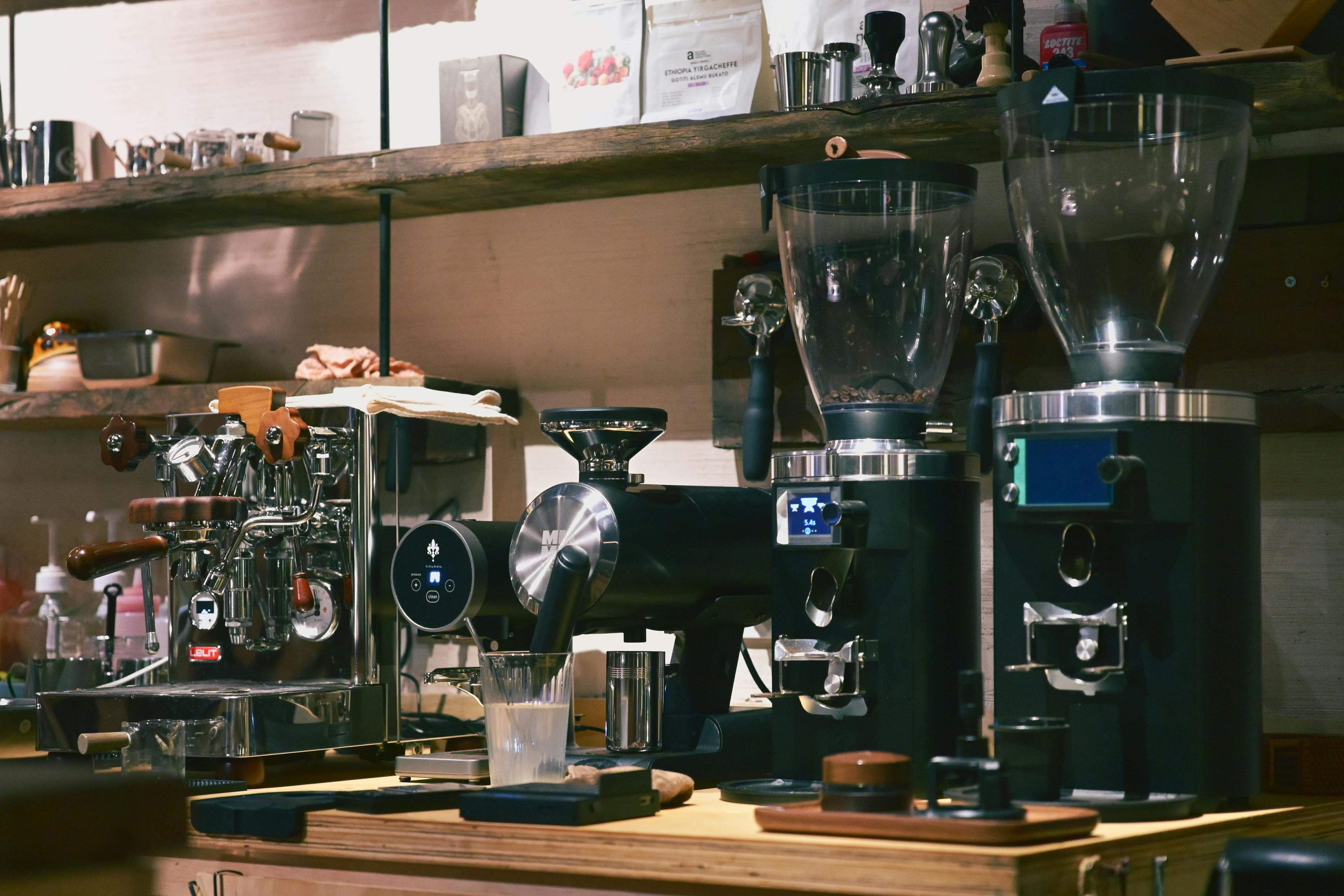
A 55mm flat burr grinder with a touchscreen and stepless micrometric adjustment, quiet enough for an apartment and fast enough that grind time is a non-issue in a daily routine.
Built around the same 63mm Mazzer conical burrs found in commercial grinders costing several times as much, in a compact single-dose design with virtually no retention. The reference point most other single-dose grinders get compared against.
Large flat burr commercial grinders built for high daily volume, fast enough that they rarely become the bottleneck during a rush. Overkill for home use, standard equipment for a real cafe or busy cart.
A 64mm flat burr grinder built exclusively for filter coffee, not espresso, using Fellow's own in-house Gen 2 Brew Burrs. Single-dose loading with auto-stop and retention consistently measured under half a gram. Fellow also sells the same grinder with optional SSP MP Red Speed burrs pre-installed for about $55 more, a separate configuration with its own price and grind profile.
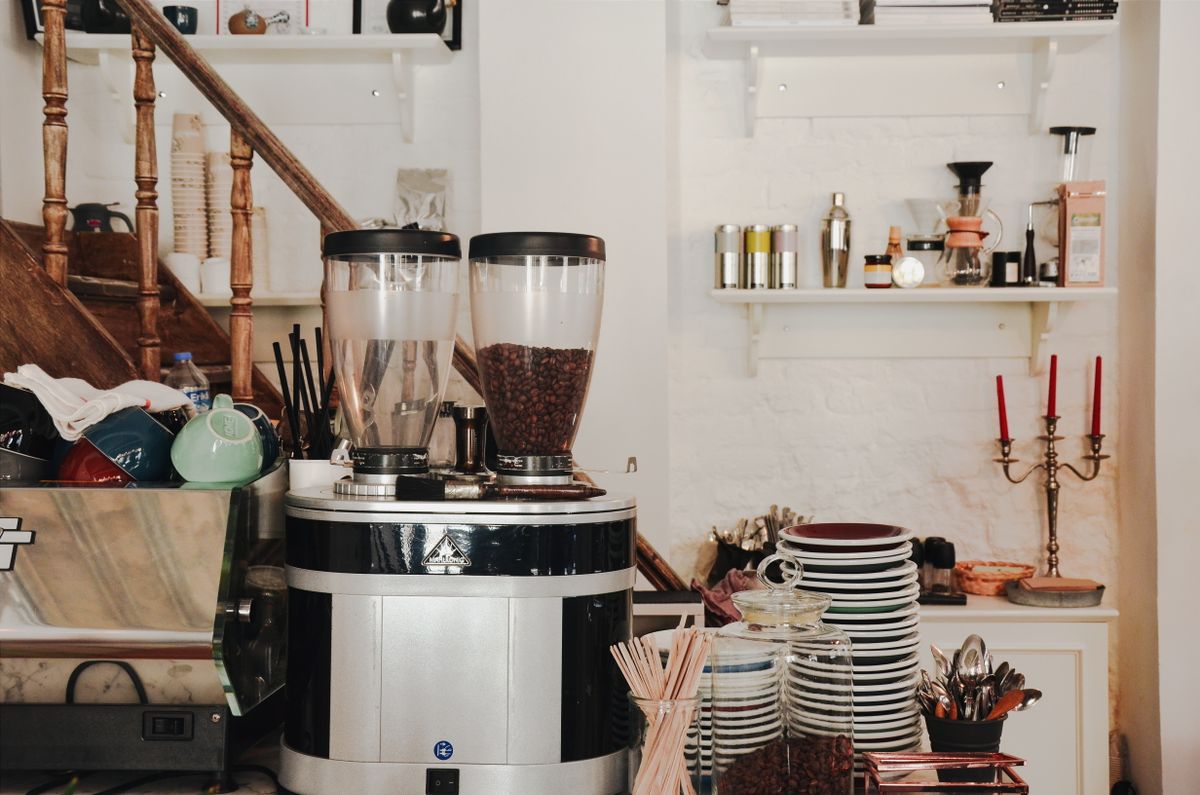
A hand-crank grinder with 48mm titanium-coated conical burrs and 8-micron adjustment steps, purpose-built for espresso but capable across brew methods. Near-zero retention thanks to a magnetic catch cup and sloped chamber, at roughly two-thirds the price of comparable electric single-dose grinders.

Flat burrs tend to produce a more uniform particle size and a brighter, more clearly-defined flavor. Conical burrs are typically quieter, retain less coffee between doses, and are more forgiving of small grind-size adjustments. Neither is strictly "better," they suit different priorities.
Single-dosing grinders (like the Niche Zero and DF64) are designed to grind exactly the amount you're about to brew, with minimal retention of old grounds inside the burr chamber. That matters because stale, retained grounds mixing into a fresh dose is a common, invisible source of inconsistent shots.
The single spec that predicts grind consistency more than any other.
Two parallel, ring-shaped burrs. Generally produce a more uniform particle size distribution, which is why most serious espresso grinders use flat burrs. Tend to run louder and retain slightly more grounds in the burr chamber.
A cone-shaped burr inside a ringed housing. Generally quieter, lower retention, and often cheaper to manufacture at a given size, common on both budget and premium single-dosing grinders. Particle distribution is typically a bit wider than an equivalent flat burr.
Burr diameter matters independently of shape: larger burrs (75mm+) generally grind faster and run cooler at a given speed than smaller burrs (40–50mm), which matters more for volume than for any single cup's quality.

A built-in scale stops grinding at a target weight (like the Baratza Sette 270Wi's calibrated dosing, a distinct model from the plain Sette 270 featured below, which uses timed dosing instead). More consistent dose-to-dose than timing, since bean density and freshness both affect how much a given grind time actually produces.
Grinds for a set number of seconds. Cheaper to manufacture and simpler to use, but the same time setting can yield a slightly different dose as beans age or humidity changes, meaning more frequent scale-checking to stay dialed in.
Retention is how many grounds get trapped in the chamber between doses. High-retention grinders mix a small amount of old, stale grounds into every fresh dose, invisible day to day, but it's a real, if minor, flavor inconsistency. Single-dosing grinders (Niche Zero, DF64) are specifically designed to minimize this, generally under a gram of retention, versus several grams on some higher-retention commercial-style grinders.
| Grinder | Best Suited For | Noise | Cleaning | Replacement Burrs | Warranty |
|---|---|---|---|---|---|
| Baratza Encore | Filter/drip primarily | Moderate | Easy, tool-free hopper removal | Widely stocked, inexpensive | 1 year |
| Baratza Sette 270 | Espresso, timed dosing | Moderate-loud | More disassembly than Encore | Widely stocked | 1 year |
| DF64 | Espresso, single-dosing | Moderate | Simple, low-retention design | Aftermarket burr swaps are common and part of its appeal | Varies by importer |
| Eureka Mignon Specialita | Espresso | Moderate | Standard, screw-based hopper | Available, moderate cost | 2 years |
| Niche Zero | Espresso & filter, single-dosing | Quiet for its class | Very low retention, minimal cleanup needed | Sold direct by Niche only | 2 years |
| Mahlkönig E65S / Ceado E37S | High-volume espresso | Louder, commercial-grade motor | More involved, commercial design | Commercial parts network | Varies, commercial terms |
| Fellow Ode Gen 2 | Filter/drip only, single-dosing | Quiet | Magnetic catch cup, low retention design | SSP burrs, sold through Fellow | 2 years |
| 1Zpresso J-Ultra | Espresso & filter, manual single-dosing | Silent (manual) | Tool-free disassembly | Sold through 1Zpresso and distributors | 1 year |
No grinder wins on every dimension, here's what you're trading away with each pick.
Not espresso-capable at a fine enough, consistent grind for most people, it's a filter/drip grinder that happens to reach into coarse espresso range on paper.
Inconsistent quality control is a known issue with some import batches, and warranty support varies significantly by where you actually bought it.
Conical burr ceiling means it won't quite match a top flat-burr grinder's shot clarity at the highest end, and it's sold direct only, no retail return flexibility.
| Your Situation | Best Fit |
|---|---|
| Filter/drip coffee only, tight budget | Baratza Encore |
| Espresso, want grind-by-weight precision | Baratza Sette 270Wi (not the plain 270, which uses timed dosing) |
| Espresso, want fast timed dosing with minimal retention | Baratza Sette 270 |
| Espresso, enjoy tinkering with burrs | DF64 |
| Espresso, want it to just work, no fuss | Eureka Mignon Specialita |
| Both espresso and filter, minimal retention matters to you | Niche Zero |
| High daily volume, home or small commercial | Mahlkönig E65S / Ceado E37S |
See our espresso machine guide for how to pair machine tier with grinder tier, an expensive machine on a cheap grinder is a common, avoidable mistake.
Grind needs differ significantly by method. See our home brewing gear guide and the grind size chart in Tools.
Weighted toward grind consistency (35%), retention & workflow (25%), warranty & parts (20%), and value in tier (20%). Here's how each grinder's number actually breaks down.
| Criterion | Weight | Finding | Score |
|---|---|---|---|
| Grind consistency | 35% | 40mm conical, good for filter/drip, not optimized for espresso fineness | 7.0 |
| Retention & workflow | 25% | Standard hopper-fed design, decent but not exceptional retention | 7.5 |
| Warranty & parts | 20% | Strong US support network, widely stocked parts, established brand | 8.5 |
| Value in tier | 20% | Best-in-class value at the entry price point | 9.5 |
| Criterion | Weight | Finding | Score |
|---|---|---|---|
| Grind consistency | 35% | 40mm conical burrs, independently tested and scored as the most consistent among grinders in its comparison set | 8.0 |
| Retention & workflow | 25% | Standard hopper-fed design, but reviewers consistently flag a genuinely convoluted user interface | 6.5 |
| Warranty & parts | 20% | 1-year limited warranty, shorter than some competitors, but backed by Breville’s large established US retail and service network | 7.5 |
| Value in tier | 20% | Strong independently-tested grind quality at this price, offset somewhat by the interface complaints | 8.0 |
| Criterion | Weight | Finding | Score |
|---|---|---|---|
| Grind consistency | 35% | 40mm conical, espresso-focused, timed dosing (not grind-by-weight, that's the 270Wi) | 8.0 |
| Retention & workflow | 25% | Straight-through path specifically engineered for minimal retention and fast dosing | 9.0 |
| Warranty & parts | 20% | Same Baratza support network as the Encore | 8.5 |
| Value in tier | 20% | Good value, though not class-leading at this specific price | 8.0 |
| Criterion | Weight | Finding | Score |
|---|---|---|---|
| Grind consistency | 35% | 64mm flat burr, larger and more consistent than the conical grinders in this tier | 8.5 |
| Retention & workflow | 25% | Near-zero retention, purpose-built single-dosing design | 9.0 |
| Warranty & parts | 20% | Sold through regional importers and private-label resellers (Turin, MiiCoffee), not one centralized manufacturer support line | 7.0 |
| Value in tier | 20% | Brought flat-burr performance down from four figures to a few hundred dollars | 9.0 |
| Criterion | Weight | Finding | Score |
|---|---|---|---|
| Grind consistency | 35% | Established Italian flat-burr design, reliable and consistent | 8.5 |
| Retention & workflow | 25% | On-demand doser design, slightly more retention than a purpose-built single-doser | 7.0 |
| Warranty & parts | 20% | Established brand, typically 2-year warranty, good parts availability | 8.5 |
| Value in tier | 20% | Solid but not class-leading value at this price point | 7.5 |
| Criterion | Weight | Finding | Score |
|---|---|---|---|
| Grind consistency | 35% | Conical burr tuned specifically for single-dosing consistency across espresso and filter | 9.0 |
| Retention & workflow | 25% | Best-in-class near-zero retention, the defining feature of this grinder | 9.5 |
| Warranty & parts | 20% | Direct-from-manufacturer support, 2-year warranty | 9.0 |
| Value in tier | 20% | Premium price, but the retention performance genuinely justifies it | 8.0 |
| Criterion | Weight | Finding | Score |
|---|---|---|---|
| Grind consistency | 35% | Commercial-grade flat burr, built for high-volume consistency | 9.0 |
| Retention & workflow | 25% | Higher retention typical of commercial high-throughput hopper-fed design | 7.0 |
| Warranty & parts | 20% | Commercial parts network, terms vary by dealer | 8.0 |
| Value in tier | 20% | Appropriate for commercial use, not "value" in a home-buyer sense | 7.0 |
| Criterion | Weight | Finding | Score |
|---|---|---|---|
| Grind consistency | 35% | 64mm flat burrs (Fellow's in-house Gen 2 Brew Burrs) purpose-built for filter, solid particle distribution across independent reviews | 8.5 |
| Retention & workflow | 25% | Single-dose loading with auto-stop; retention consistently measured under half a gram | 9.0 |
| Warranty & parts | 20% | 2-year manufacturer warranty, longest in this lineup; smaller parts ecosystem than Baratza | 8.5 |
| Value in tier | 20% | Solid grind quality for the price, though filter-only limits the use case; the optional SSP burr upgrade pushes performance closer to $800+ grinders for about $55 more | 7.5 |
| Criterion | Weight | Finding | Score |
|---|---|---|---|
| Grind consistency | 35% | 48mm titanium-coated conical burrs, 8-micron adjustment steps, purpose-built espresso geometry | 8.5 |
| Retention & workflow | 25% | Near-zero retention via magnetic catch cup and sloped chamber, offset by manual hand-crank effort and time | 8.5 |
| Warranty & parts | 20% | Standard 1-year warranty across the 1Zpresso line; smaller international parts network than Baratza | 7.5 |
| Value in tier | 20% | Widely cited as matching or beating $300+ manual grinders like the Comandante at roughly two-thirds the price | 9.0 |
Criterion scores are our editorial judgment applied consistently against the stated weighting, not independently lab-measured. Full reasoning behind these weights and scores, including why the closest calls landed where they did, is logged separately for our own tracking and available on request.
Eureka, Mahlkönig, and Ceado are sold primarily through regional importers and authorized retailers rather than one central global storefront, so availability, warranty coverage, and authorized sellers may vary by model, importer, and region. DF64 is manufactured by Zhejiang Feilai Electric Appliance (FL Coffee) and sold under several private-label names (DF64, Turin, MiiCoffee, and others, all the same underlying grinder); df64coffee.com self-identifies as an official store and dealer, though it functions as a distributor rather than a direct manufacturer storefront. Confirm current specifications, pricing, and warranty terms with the manufacturer or an authorized retailer before purchasing.
Brew ratios, grind sizes, troubleshooting fixes, and a gear-buying checklist. Free, instant, no spam.
 Espresso · Roasting · Business